
Travel souvenir ideas worth keeping, from free finds to a postcard from the future
· By Veronica West
A travel souvenir worth keeping is something from a trip that you still use, display or open years later, not something that ends up in a drawer.
The travel souvenirs people keep are small, locally made and tied to a memory they can name. Free ones such as ticket stubs and tourist maps count as much as a ceramic bowl. Pick one thing to collect, and decide where it will live before you buy.
Below: food, handmade pieces, paper and free finds, how to collect and display them, and one postcard that arrives from your past.
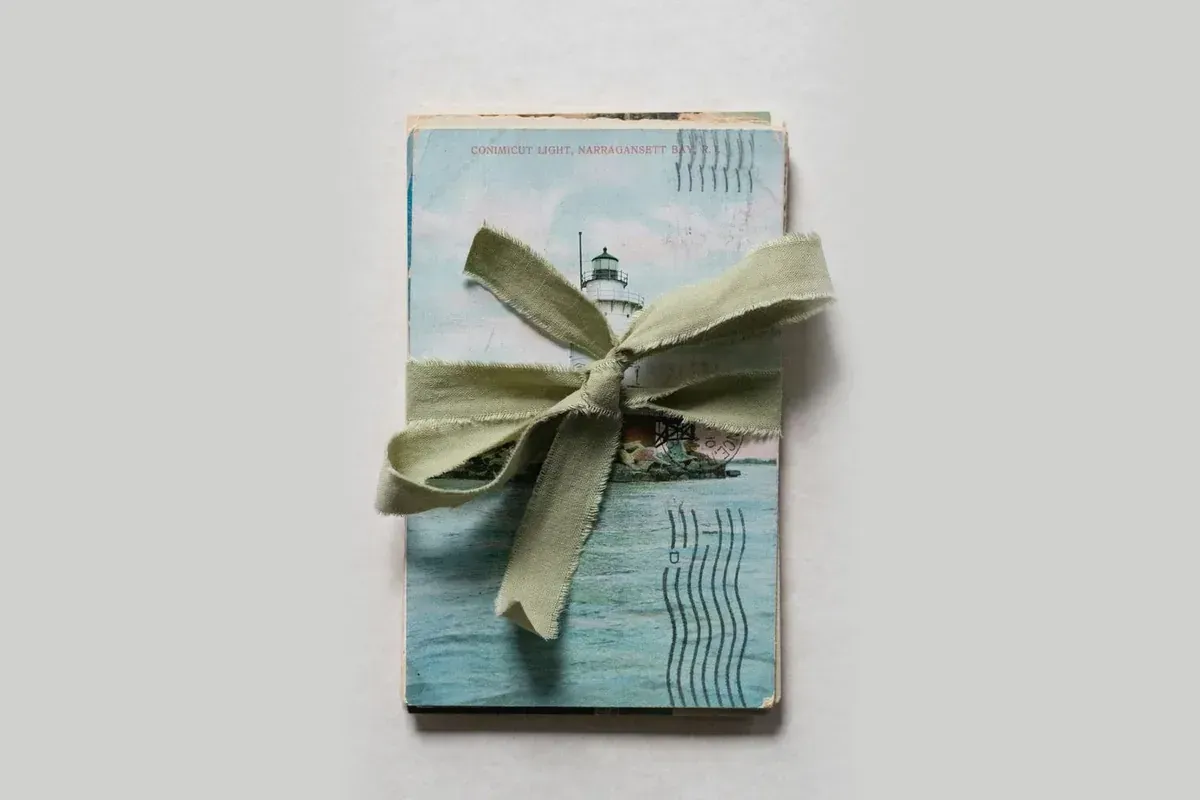
Travel souvenir ideas at a glance
Travel souvenir ideas fall into seven kinds, and the cheapest ones, such as ticket stubs and tourist maps, are free. Use the table to pick a kind, then jump to its section.
| Kind of travel souvenir | Cost | Fits in hand luggage | Best for |
|---|---|---|---|
| Food and drink | Low | Solids yes; liquids check your airport | Something to use up and share |
| Handmade pieces | Medium to high | Prints and textiles yes; ceramics wrapped | A keepsake you use or display every day |
| Paper: books, maps, money, postcards | Low | Yes, flat | Light packers and collectors |
| Free finds | Free | Yes | Any budget, any trip |
| Collectible tokens: ornaments, pins, pressed pennies | Low | Yes | Building a collection |
| A postcard that arrives later | Free to €10 | Nothing to carry | A memento that comes back to you |
| Digital: a travel journal or photo book | Free to medium | Nothing to carry | People who prefer fewer objects |
Across travel guides, the souvenirs people keep fall into three families: useful things, local art and keepsakes, and free or natural mementos. The ones that last tend to be used often or displayed together as a group.
How to choose a travel souvenir you will keep
A travel souvenir worth keeping passes three tests: it comes from the place, you will use or display it, and it survives the journey home.
- It comes from the place. A locally made souvenir carries the trip with it; a mass-produced one could have come from anywhere. To check, ask who made it, buy from the maker, a market stall or a museum shop, and look for a maker's mark or signature.
- You will use or display it. A mug you drink from every morning gets more use than a figurine in a box. Picture where it goes at home before you pay.
- It survives the journey. Glass, ceramics and liquids need wrapping or checked luggage; prints, textiles and paper travel flat.
A simple rule keeps the haul small: one travel souvenir per trip, or one per city. One object tied to a memory you can name, such as the stall where you bought it or the person who made it, outlasts ten generic ones. For the research on why we buy them at all, read our article on why we buy souvenirs.
Souvenirs to skip
Generic magnets and keyrings are cheap and popular, but most are mass-produced and look the same in every city. Fake branded goods, and products made from protected plants or animals, can be seized at customs. Novelty items you would never display are money spent on a drawer. None of this is a rule, only a test of whether you will still want it in five years.
Food and drink souvenirs
Food and drink make the easiest travel souvenir to use up, and the easiest to get wrong at customs.
- What travels well: spices, tea, coffee, olive oil, sweets, sealed local biscuits and a local cookbook to go with them. Buy what you would cook with, not what you would store.
- Non-perishable only: dried, sealed and shop-packed food lasts the trip; fresh cheese, cured meat and fruit often don't, and many countries restrict them.
- Customs: meat and dairy are the products most often banned when you bring food home. Before you buy, check your home country's rules: what you can bring into Great Britain and what the US allows. Declare anything you are unsure about.
- Liquids: olive oil, wine and spirits go in checked luggage unless your departure airport allows larger containers in hand luggage. Check your airport's current liquid limit before you fly.
Some places make it easy: edible souvenirs from Paris include macarons and chocolate, cava and olive oil from Barcelona come from La Boqueria's stalls, and Edinburgh shortbread and tablet is cheapest at the supermarket. Around New Year, some food souvenirs carry luck too, from marzipan pigs in Germany to twelve grapes in Spain: see our guide to lucky New Year foods and charms.
Handmade pieces: art, ceramics, textiles and jewellery
Handmade travel souvenirs such as local art, ceramics, textiles and jewellery are the most often recommended kind, because they come from one place and last.
Local art and prints
Small prints, sketches and watercolours fit in a flat envelope or a book, so they travel in hand luggage. Buy from the artist at a studio or market where you can: the price goes to the maker, and you remember who made it. One print from every trip, framed alike and hung together, turns into a gallery wall.
Ceramics and kitchenware
A handmade mug, bowl or tea towel gets used every day, which keeps the trip in your routine. Ceramics are fragile, so wrap each piece in clothes or bubble wrap and carry it in hand luggage, or double-box it if it goes in the hold.
Textiles and scarves
Scarves, woven blankets and embroidered cloth don't break, and they pack flat. Weigh them before you buy, because a wool blanket can push a bag over its limit. Delicate silk can be framed; heavier weaves can hang on a wall or cover a chair.
Jewellery
A ring, a pendant or a pair of earrings from a local maker or flea market is a travel souvenir you wear, so it gets more use than anything on a shelf. Ask what it is made of, and keep the receipt for customs if it is silver or gold.
Some handmade pieces are made for luck. In Japan, shrines sell omamori charms and temples sell daruma dolls at New Year; the Tokyo souvenir guide lists where to find them, and handcrafted Rome souvenirs range from leather to ceramics.
Paper souvenirs: books, maps, currency and postcards
Paper travel souvenirs such as books, maps, banknotes and postcards weigh almost nothing and cost little.
- Books: a novel set in the place, or a cookbook by a local author, carries the trip into your evenings. Independent bookshops often stamp or wrap the books they sell.
- Maps: a paper city map, marked with where you stayed and walked, becomes a record of the trip; old maps from flea markets can be framed.
- Coins, banknotes and stamps: small change left at the end of a trip, a sheet of local stamps from the post office, or an old banknote from a market stall make a flat collection that fills a single album.
- Vintage postcards: postcards from a flea market, already written and posted decades ago, are more personal than a new card from the rack.
- A postcard to yourself: buy a card, write it on the spot, and post it home with a local stamp. It is cheap and light, but it often arrives before you are home. Our guide to mailing a postcard to yourself on a trip has the details.
- Digital paper: a travel journal written each evening, or a photo book made when you are home, takes nothing to carry.
For a city built for paper souvenirs, see London's bookshop and market finds, from Daunt Books' canvas totes to the stalls of Portobello Road.
Free travel souvenirs that cost nothing
Free travel souvenirs such as ticket stubs, tourist maps and a labelled stone cost nothing and still mark a trip.
- Tickets and passes: museum tickets, train tickets, boarding passes and concert wristbands carry a date and a place.
- Printed leaflets: tourist maps, menus, metro maps and hotel cards from the desk.
- Natural finds: a pebble, a leaf or a pressed flower, labelled with the exact place and date. Check local laws first: protected sites forbid it, and Sardinia fines visitors who take sand or pebbles from its beaches.
- Your own record: a photo of the same spot each day, or a voice memo of a street market, a train announcement or a friend laughing.
- Things you can't pack: a recipe you learned, a phrase in the language or a skill from a class.
Keep free souvenirs together in one flat folder or a memory box per trip, labelled on the outside with the place and year, so they don't scatter around the house.
A souvenir from the future: the time capsule postcard
A time capsule postcard is a travel souvenir you post once and receive later: FuturePosts prints an A5 card and delivers it in the month you choose, 1 month to 10 years ahead.
You add a photo from the trip (a JPG or PNG up to 10 MB), write a message to your future self, and pick an opening month. The place and month the photo was taken are printed on the card as its postmark. Unlike a postcard posted from the trip, it doesn't arrive before you are home: it comes back months or years later.
| Option | Price | What you get | What it can't do |
|---|---|---|---|
| Email Postcard | Free | The same postcard, opened online and emailed to you in your opening month | Nothing is printed |
| Classic FuturePost | €7 | A printed A5 card (148 × 210 mm), free worldwide shipping; it can be posted to someone else's address | Arrive sooner than 1 month |
| Postcard + Vault | €10 | A printed card plus a voice recording and 20 extra photos, sealed until opening | Arrive sooner than 1 month |
The time capsule opens on the last day of the month you pick, and the printed card arrives within that month, so it is not instant. If the post loses a printed card, FuturePosts reprints it once, free, if you claim within 60 days of your opening month. The free route works too: post a shop-bought card from the trip, or choose the Email Postcard.
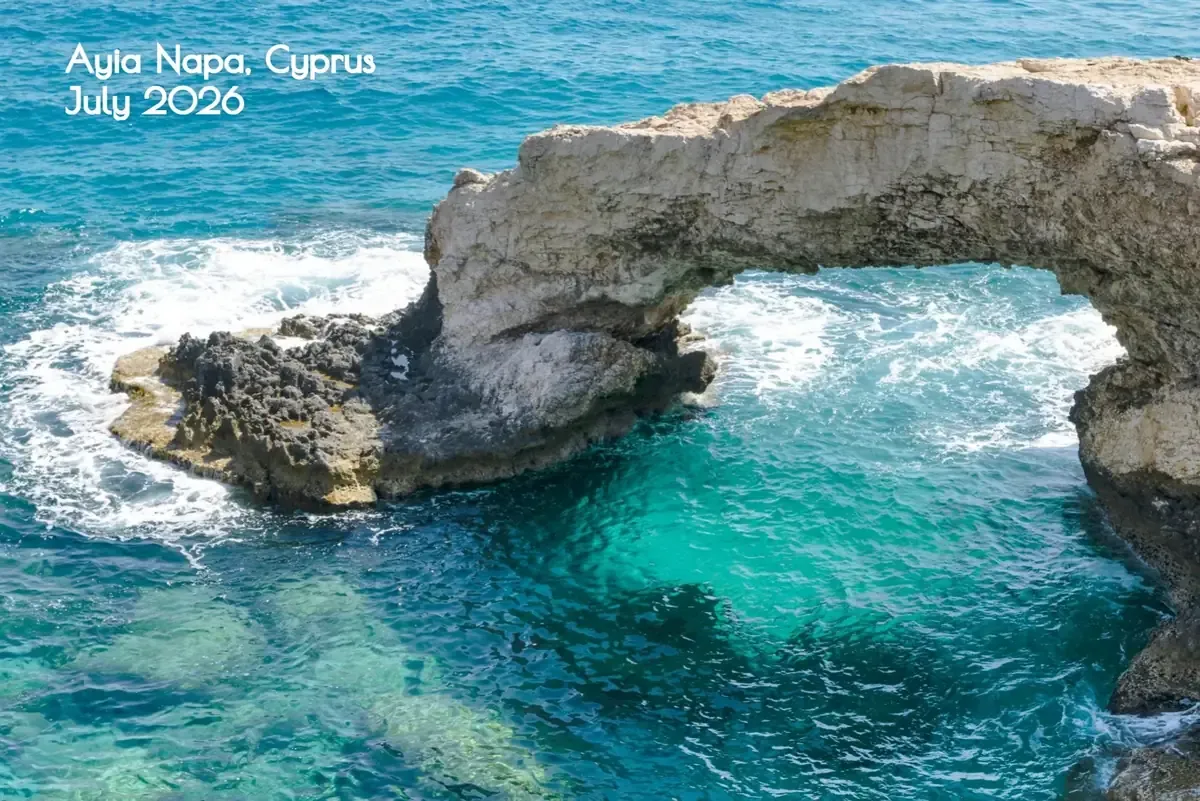
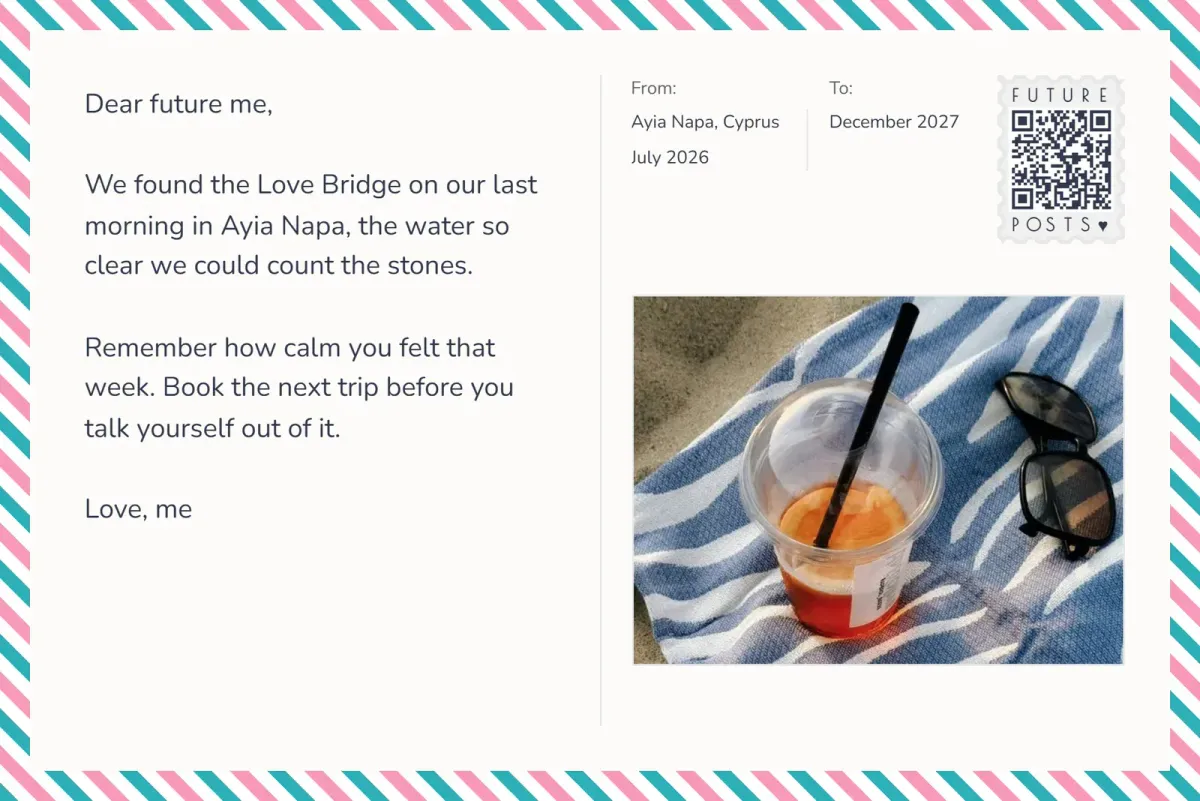
For how sealing, privacy and opening day work, see how a FuturePosts time capsule works, and compare every option on the pricing grid.
How to start a souvenir collection
A travel souvenir collection works best with one simple rule, such as one item per trip or one type of object from every place.
- Pick a rule: one item per trip, one per city, or only from places you actually stood in.
- Pick an object you can find almost anywhere, or you will come home empty-handed: a fridge magnet, a tea towel or a postcard exists in nearly every town.
- Decide where it will live before it grows: one shelf, one box or one wall.
- Keep a list from the start, with the place and date of each piece, and a hunting list of what you still want.
- Let the pieces differ: a collection of spoons doesn't need identical spoons. The theme holds it together.
Collection themes that work:
| Theme | Why it works |
|---|---|
| Christmas tree ornaments | Small, cheap, and they come out every December |
| Spoons or thimbles | Sold almost everywhere, easy to display on a rack |
| Pressed pennies | Machines at many attractions; costs a coin or two |
| Tea towels | Flat, useful, easy to frame or use |
| Coins and banknotes | Free if you keep your change; fits one album |
| Vintage postcards | Light, cheap at markets, easy to frame |
| Ceramic mugs | Used every day |
| Patches or pins | Go on a bag or a board |
One kind of object from 30 places reads as a collection; 30 unrelated objects read as clutter.
How to display travel souvenirs
Travel souvenirs look best displayed in groups, with one place for each kind, rather than scattered around a home.
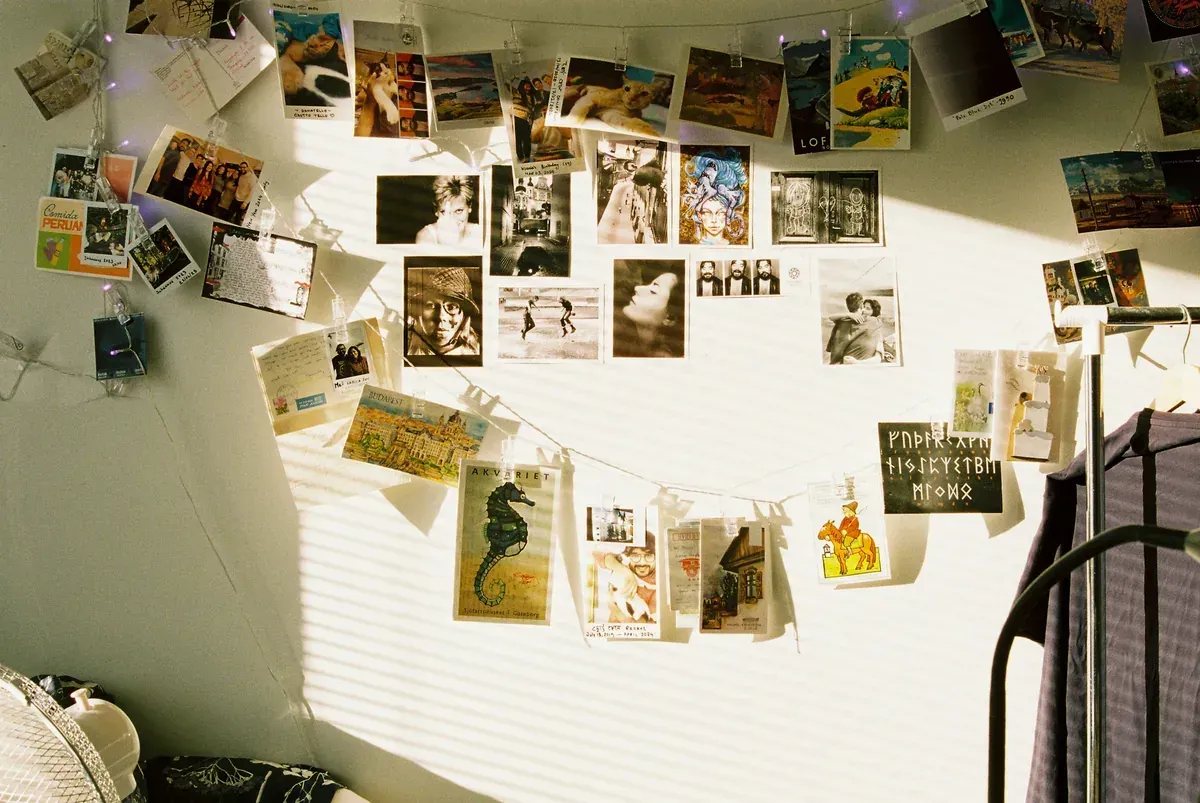
- Textiles: drape a scarf over a chair, hang a woven piece on a rail, or frame delicate silk behind glass.
- Small objects: stones, shells, coins and figures sit well under a bell jar, in a glass-topped table or in a shadow box, one box per trip.
- Paper: pin postcards and tickets to a cork board, hang them on string with pegs, or frame a set of vintage postcards in one large frame.
- Magnets: a magnetic board in the hall shows them better than the fridge door.
- Ornaments: they live on the tree each December and in one labelled box the rest of the year.
- Mugs and coasters: use them when guests visit; each one starts a story.
Label each piece on the back or underneath with the place and year. In a small home, pick one wall or one shelf for every travel souvenir you own and keep the rest of the rooms clear.
Travel souvenir gifts for someone who loves travel
Travel souvenir gifts work best when they match the person's taste rather than the destination's clichés.
For a traveller at home:
- A scratch-off world map or travel tracker to mark the places they have been.
- A local cookbook or novel from a place they love.
- Local tea, coffee or spices they can't find at home.
- A vintage postcard of a town they have visited.
Bringing something back from your own trip? Think of what the person uses at home, not what the shop sells most: a cook gets spices, a reader gets a book, a gardener gets seeds where customs allow.
A postcard can be a gift too. A Classic FuturePost (€7) can be posted to someone else's address and arrives in the month you choose. More in the postcard section.
Getting souvenirs home: packing, customs and what to leave
Getting travel souvenirs home safely takes three checks: packing for breakables, customs rules for food and natural items, and what you should not take.
- Breakables: double-box them: bubble wrap around the piece, a small box, then padding inside a second box. A "fragile" label alone doesn't protect anything.
- Shipping: posting large items home adds cost and delay, so small travel souvenirs usually win.
- Customs: check the rules for food, alcohol and plants before you buy, and declare anything you are unsure of. Meat and dairy are the most often restricted.
- What to leave: sand, shells and stones from protected sites, products from protected species, and fake branded goods can all be confiscated, and some carry fines.
City souvenir guides
City souvenir guides on FuturePosts list the shops, markets and makers for each travel souvenir idea above.
- Paris souvenirs, from macarons to perfume
- Barcelona's artisan and design gifts
- Rome souvenirs, from leather to religious art
- London's markets, from Portobello Road to Brick Lane
- souvenirs from Tokyo, including omamori and kitchen knives
- Edinburgh souvenirs beyond shortbread
For every city, see all of our souvenir guides.
Travel souvenir questions
What is a travel souvenir?
A travel souvenir is an object, or a record, that you keep to remember a place you visited. Most are bought, such as food, crafts and postcards; others are found, such as tickets, maps, stones or photos. The ones worth keeping are tied to a memory you can name.
What can I buy as a souvenir?
Buy something made in the place that you will use or display: local food that is non-perishable, a print or a piece of ceramics from a maker, a scarf, a book by a local author, or jewellery from a market. Check customs rules for food and natural items before you pay.
What is the most popular type of souvenir?
Across travel guides, the most common souvenirs are fridge magnets, keyrings, postcards, mugs, T-shirts and local food. They are popular because they are cheap and sold everywhere. The souvenirs people keep longest tend to be locally made or used every day.
What is the best souvenir to collect?
The best travel souvenir to collect is one you can find almost anywhere and display in one place: Christmas tree ornaments, pressed pennies, tea towels, coins, vintage postcards or mugs. Pick one theme, keep a list of where each piece came from, and decide where the collection will live.
What are some simple souvenir ideas?
Simple travel souvenirs include a postcard, a ticket stub, a tourist map, a local recipe, a sheet of local stamps, a pressed flower labelled with the date, or a photo of the same spot each day. Most cost nothing and fit in a book.
What should I get for someone who likes travelling?
Give a traveller something tied to places they love: a scratch-off world map, a cookbook or novel from a country they have visited, local tea or spices, or a vintage postcard of a favourite town. A printed postcard set to arrive months later is another option.
What are some unique or quirky travel gifts?
Quirky travel gifts include pressed pennies, a jar of local spice blend, a vintage postcard already written by a stranger decades ago, a voice memo of a street market, or a postcard addressed to arrive in a year's time. The best ones carry a story the person can retell.
What are gifts from travelling called?
Gifts you bring back from a trip are called souvenirs, from the French word for "to remember". In Japan, omiyage are the gifts travellers bring back for family and colleagues, often boxed local sweets.
How do I display travel souvenirs?
Display travel souvenirs in groups: textiles on a rail or in a frame, small objects in a shadow box or under a bell jar, paper on a cork board or string, and magnets on a magnetic board. Label each piece with the place and year.
Can I send myself a souvenir postcard that arrives in a few months or years?
Yes. A Classic FuturePost (€7, printed and posted worldwide) or the free Email Postcard arrives in the month you choose, from 1 month to 10 years ahead. It can't arrive sooner than 1 month. Details are in the postcard section.