
New Year good luck souvenirs: charms to bring home
A souvenir is a small piece of a place you carry home. At New Year, many countries sell souvenirs that carry luck as well: charms for a goal, sweets for a lucky start, gifts for the first visitor through the door. Here are the ones worth packing.

New Year is the one holiday when half the world goes shopping for luck. Japan sells goal charms with blank eyes, Germany sells pigs made of marzipan, and Greece hangs pomegranates by the front door. These are the good luck souvenirs worth bringing home, what each one means, and where to find it.
Japan: daruma dolls and omamori charms
Japan starts the year with a first visit to a shrine or temple, called hatsumode, and that visit is where its two luckiest souvenirs come from.
Daruma doll: a goal charm with blank eyes
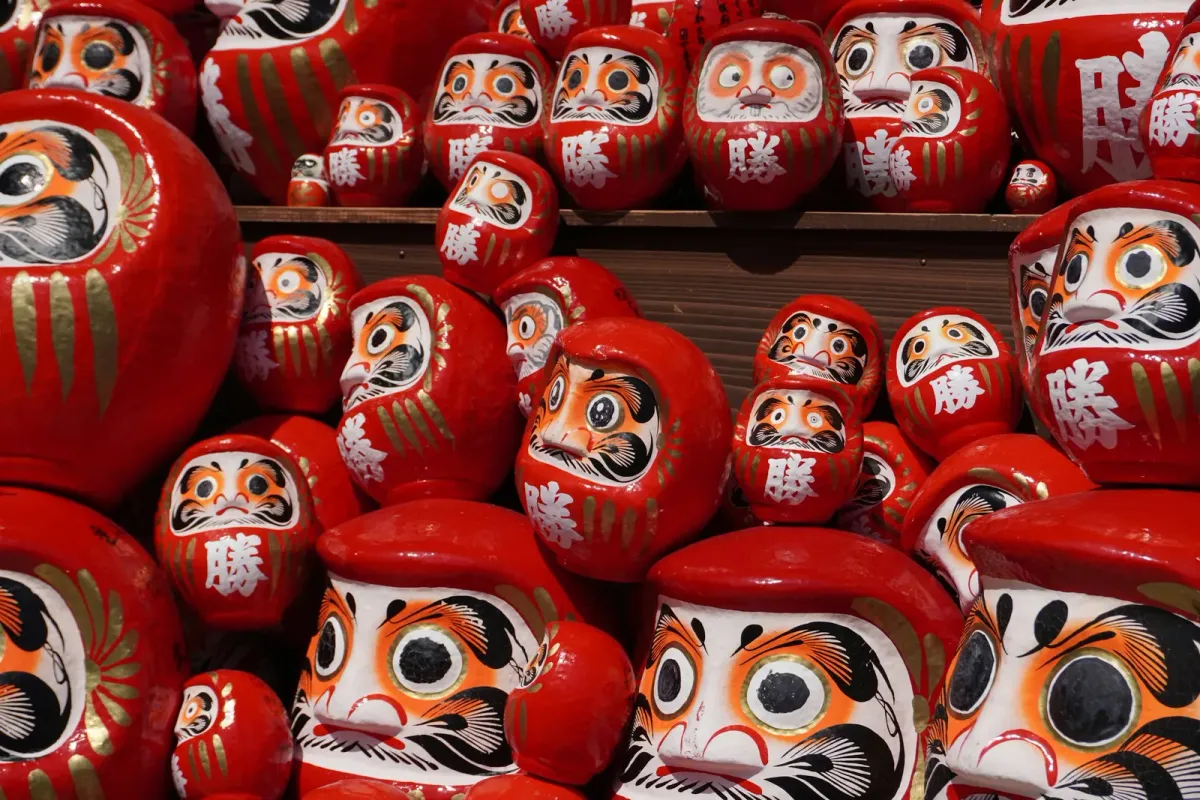
The daruma is a round red doll with a weighted base, so it rolls back upright every time it is knocked over. It is sold with blank white eyes. When you set a goal or make a wish, you paint in the left eye. When the goal comes true, you paint in the right one. Until then, the half-finished face on your shelf is a daily reminder of what you promised yourself.
At the end of the year, many people take their daruma back to the temple where they bought it. The old dolls are burned together in a ceremony, usually just after New Year's Day, and a new daruma comes home for the year ahead. Some people keep a finished one instead, as a souvenir of a goal they reached.
- Who it is for: anyone with one big goal for the year.
- Where to buy: the daruma markets held at temples in January, such as the Ome Daruma Market in western Tokyo, and the stalls near Kawasaki Daishi, just south of the city, around New Year. Check this year's dates before you go. Most of Japan's daruma are made in Takasaki, north of Tokyo, which holds a daruma festival every 1 and 2 January.
Omamori: a charm for the year ahead
Omamori are small fabric pouches, often embroidered, sold at shrines and temples. Each one is made for something in particular: health, safe travel, study, love or success at work. Custom says you keep it closed and carry it with you.
New Year is when people swap them. On their first shrine visit of the year, many return last year's omamori, so it can be burned with respect, and take home a fresh one. It is a custom rather than a rule: a charm bought for an exam or a long journey is often kept until that chapter is over.
- Who it is for: a meaningful gift that weighs almost nothing.
- Where to buy: any shrine or temple. For a first visit of the year in Tokyo, Meiji Jingu and Senso-ji in Asakusa are two of the most popular. More picks in our Tokyo souvenir guide.
A souvenir from next New Year: your resolutions
A daruma works because it makes you look back. Your resolutions can do the same. Write them down on our New Year's resolutions page and choose when you want to see them again: the end of March, June or December, three months into the year, halfway, or at its end. They come back to you by email that month. It is free and takes two minutes.
Would you rather hold them in your hands? Put the same words on a printed postcard in the postcard designer, with a photo from this year on the front, and it arrives at a future time of your choosing.
Spain: twelve lucky grapes and a glass of cava
At midnight on New Year's Eve, Spain eats twelve grapes, one at each chime of the clock, for a lucky month with every grape. Much of the country follows the chimes from the clock at Puerta del Sol in Madrid, shown live on television. Keeping up is harder than it sounds, which is half the fun.
Nobody agrees on how it began. A popular story says growers in Alicante had too many grapes in 1909 and found a clever way to sell them. Historians point further back, to the 1880s, when families in Madrid copied the French habit of grapes and champagne at New Year.
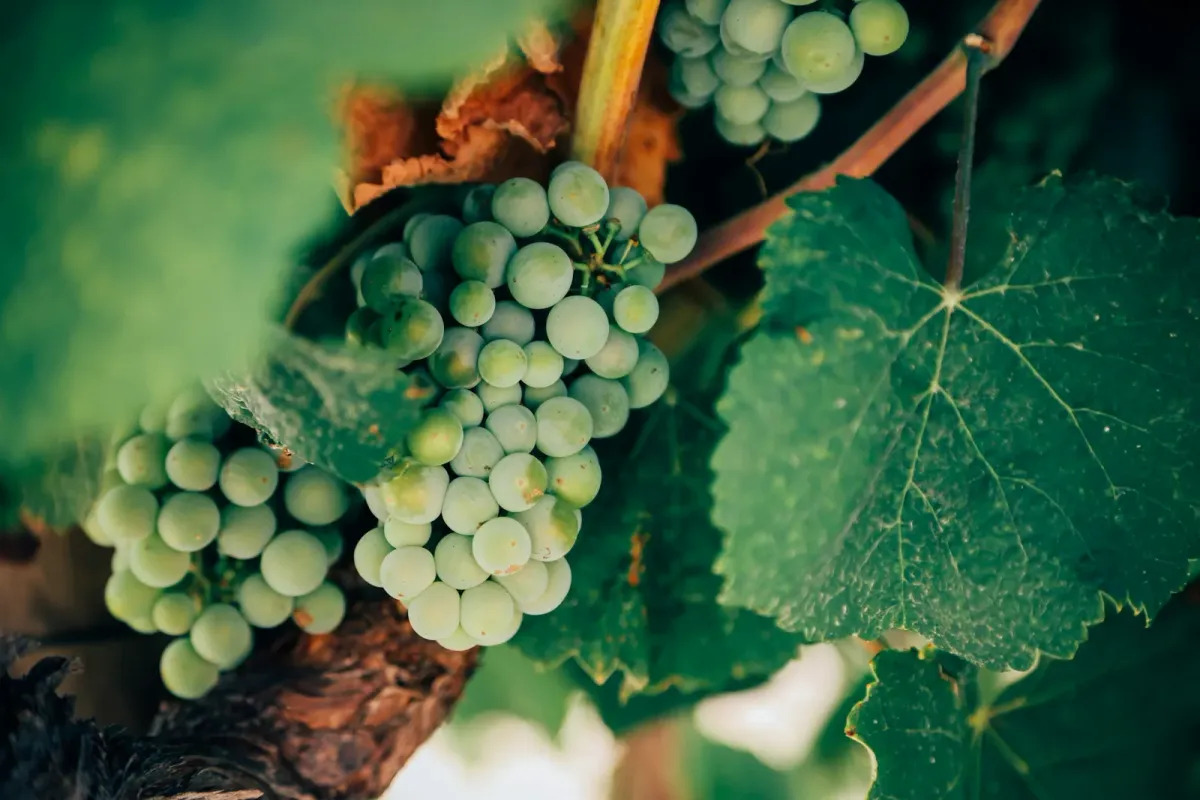
In December, Spanish supermarkets sell grapes for the night as uvas de la suerte, lucky grapes. Many come from Alicante, where they ripen on the vine inside paper bags, which keeps their skins thin.
- Who it is for: whoever is hosting New Year's Eve.
- Where to buy: the grapes at any Spanish supermarket in the last days of December, and a bottle of cava from Catalonia for the toast. Our Barcelona souvenir guide has more on where to find it.
Germany and Austria: lucky pigs and chimney sweeps
Around New Year, shops in Germany and Austria fill with Glücksbringer, luck bringers: little pigs, chimney sweeps, four-leaf clovers, horseshoes, ladybirds and red and white toadstools, made of marzipan, chocolate or biscuit. They are given to friends, family and colleagues for a lucky start to the year.
The pig is the favourite. It has stood for plenty since the days when owning pigs meant a household would eat well, and in German "Schwein haben", to have a pig, still means to be lucky.
One more tradition to bring home: telling the new year's fortune by dropping melted metal into cold water and reading the shape it makes. Lead kits have not been sold in the EU since 2018 because of the health risks, as the German consumer magazine Öko-Test explains (in German), so the custom now uses wax. A wax pouring kit, Wachsgießen, makes a fun souvenir for your own New Year's Eve.
- Who it is for: anyone with a sweet tooth, and your colleagues on the first day back.
- Where to buy: bakeries, confectioners and supermarkets in late December. Lübeck, in northern Germany, is famous for its marzipan.
Scotland: Hogmanay first-footing gifts
Hogmanay is Scotland's New Year, and its luckiest custom happens on the doorstep. The first person to cross a home's threshold after midnight, the first-footer, brings the luck for the whole year, and should never arrive empty-handed. Tradition prefers a tall, dark-haired visitor, though these days anyone with a gift will do.
The classic gifts each carry a wish. Coal is for warmth and salt for health, though salt is rarer now. Shortbread and black bun, a rich fruit cake baked in pastry, stand for food on the table. And a dram of whisky toasts the new year. For where to celebrate, from torchlight processions to fireworks, see VisitScotland's Hogmanay guide.
- Who it is for: the friends whose door you knock on after midnight.
- Where to buy: shortbread and black bun from Scottish bakeries in December, and a bottle of Scotch whisky. One Scottish supermarket chain has even handed out free lumps of coal at its tills for first-footing.
Italy: lentils for money and something red
On New Year's Eve, Italian tables serve lentils with cotechino, a rich pork sausage. The little round lentils look like coins, so every spoonful is a wish for money in the year ahead. Italy's official tourism site traces the custom back to the Romans, who gave each other leather pouches of coins at New Year in the hope they would multiply.
The other custom is worn rather than eaten: red underwear on New Year's Eve, for good fortune in the year to come.
- Who it is for: the cook in the family, and anyone who enjoys a joke gift.
- Where to buy: a bag of good lentils from an Italian deli or market (those from Castelluccio di Norcia, in Umbria, are among the most prized) and a packed cotechino from a salumeria. Check what your country lets you bring home before you pack meat. Our Rome souvenir guide has more food to bring back.
Greece: pomegranate gouri charms
In Greece, the most common New Year gift is a gouri, a lucky charm for the year ahead. Gouria are decorated with horseshoes, coins, keys, olive branches or the blue evil eye, but the favourite by far is the pomegranate, an ancient sign of plenty whose many seeds stand for abundance.
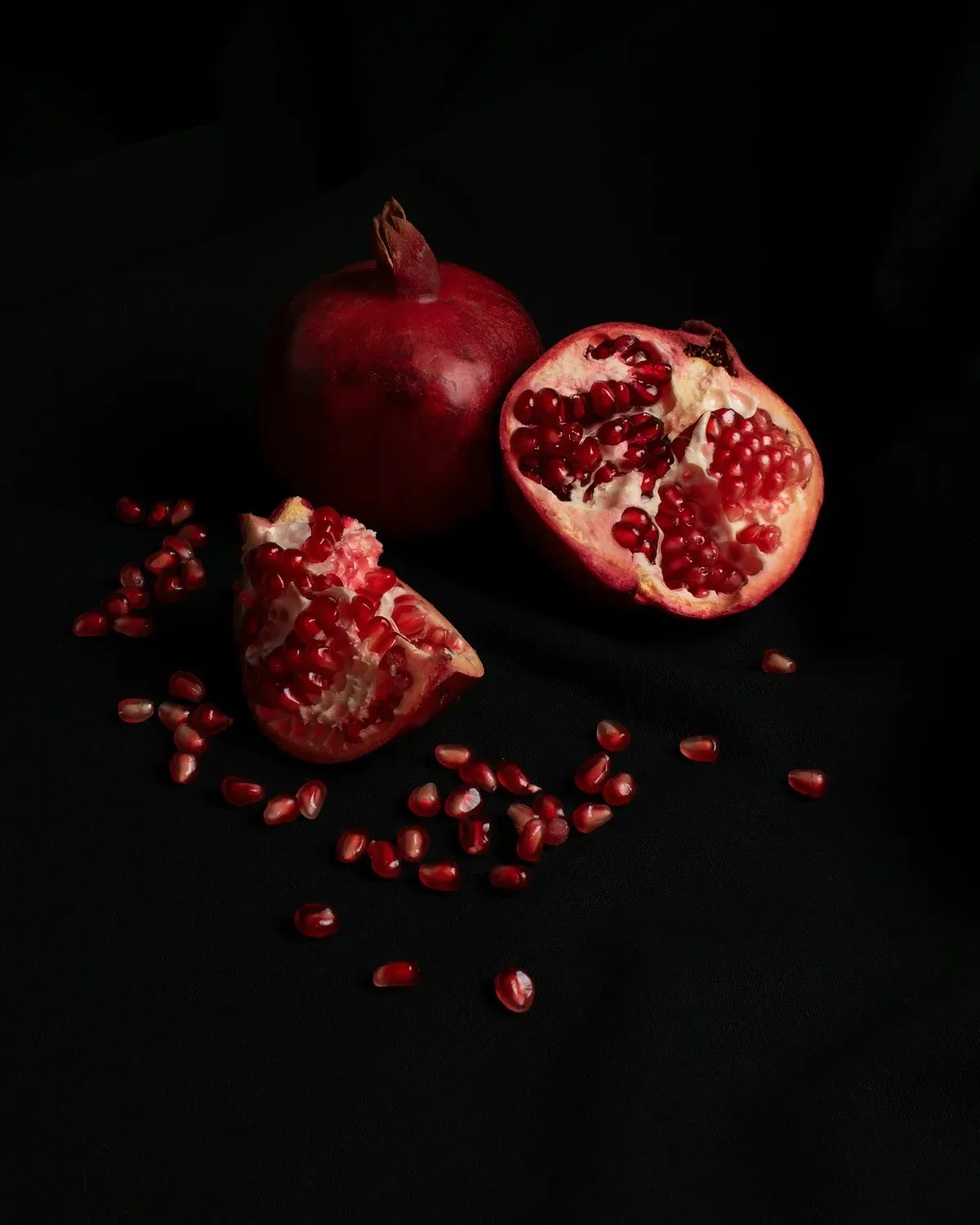
The real fruit has its moment at New Year, when families smash a pomegranate on the doorstep and step inside right foot first. The more seeds that scatter, the more luck the year will bring. Then comes the vasilopita, a New Year cake with a coin baked inside: whoever finds it is lucky for the year, and keeps the coin. The Athens magazine Athens Insider has more Greek customs for a lucky year.
- Who it is for: a host gift that lasts all year, by the front door or on a keyring.
- Where to buy: gift shops and jewellers across Greece in December, from simple ceramic pomegranates to designer jewellery.
New Year lucky souvenir FAQs
What do you do with a daruma doll at the end of the year?
Many people take it back to the temple where they bought it. The old dolls are burned together in a ceremony, usually just after New Year's Day, and a new daruma is bought for the year ahead. If your goal came true, paint in its second eye first. Some people keep a finished daruma at home instead, as a reminder of a goal they reached.
Why do people eat 12 grapes on New Year's Eve?
In Spain, eating one grape at each of the twelve chimes of midnight is said to bring a lucky month for every grape. The custom goes back at least to the 1880s, and today much of the country follows the chimes from the clock at Puerta del Sol in Madrid.
What is a good luck gift for New Year?
A charm made for the occasion makes the best New Year gift. A few favourites:
- A marzipan lucky pig from Germany or Austria.
- A pomegranate gouri from Greece.
- An omamori or a daruma doll from Japan.
- Shortbread, black bun or a lump of coal, if you are first-footing in Scotland.
Start the new year with a note to your future self

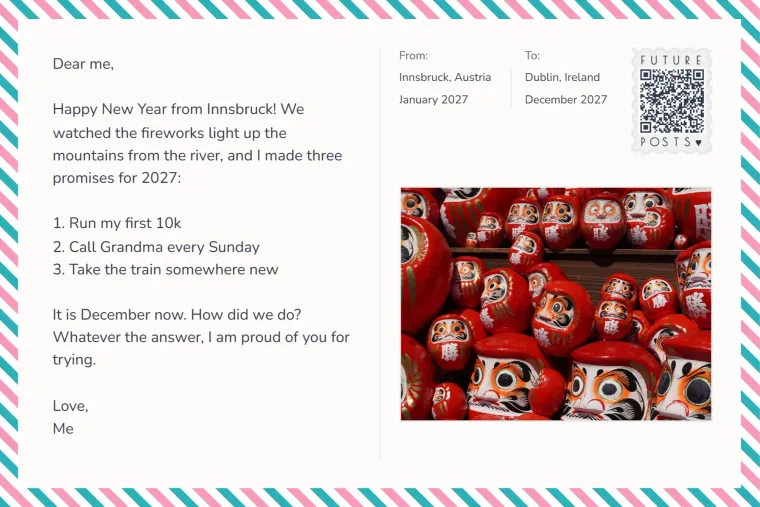
Write a quick New Year's resolutions list and we will email it back to you at a future time of your choosing, or make a time capsule postcard for your future self.
Design your postcard